3Ac Great Wall Trek links Jinshanling, Gubeikou, Huanghuacheng, Xishuiyu. The program balances walking, transfers, meals and overnight arrangements across a longer section of the Wall.
Summary
3Ac Great Wall Trek links Jinshanling, Gubeikou, Huanghuacheng, Xishuiyu. The program balances walking, transfers, meals and overnight arrangements across a longer section of the Wall.
Route map
Schematic route · not to scale
Route stop
Brief itinerary
Day 1 · Majestic Gubeikou-Jinshanling
Day 2 · Jinshanling-West Simatai
Day 3 · Lakeside Huanghuacheng-Xishuiyu
Detailed itinerary
Day-by-day route details from our original tour program. Confirm the departure time, walking distance, meals, lodging and permitted campsite in your booking proposal; these may change with access and weather.
Day 1 · Majestic Gubeikou-Jinshanling
Hiking Distance: 10km/6miles
Hours to Take: 4.5
Accommodation: Hostel at Jinshanling
Meals: Lunch and dinner
Water: Unlimited bottles
We will leave Beijing at 9:30 am and drive 2 hours to Jiankou.
From your pick up we will drive directly to the Gubeikou Great Wall. The drive should take a little over 2.5 hours. The Gubeikou Great Wall occupies a strategically important location, which is difficult to access. Situated between Shanhaiguan Pass and Juyongguan Pass, and about 62 miles to Beijing, the bastion is protecting the northern gateway to the capital. There are 14 beacon towers, 143 watchtowers, 16 strategic pass, three citadels, and many other military constructions.
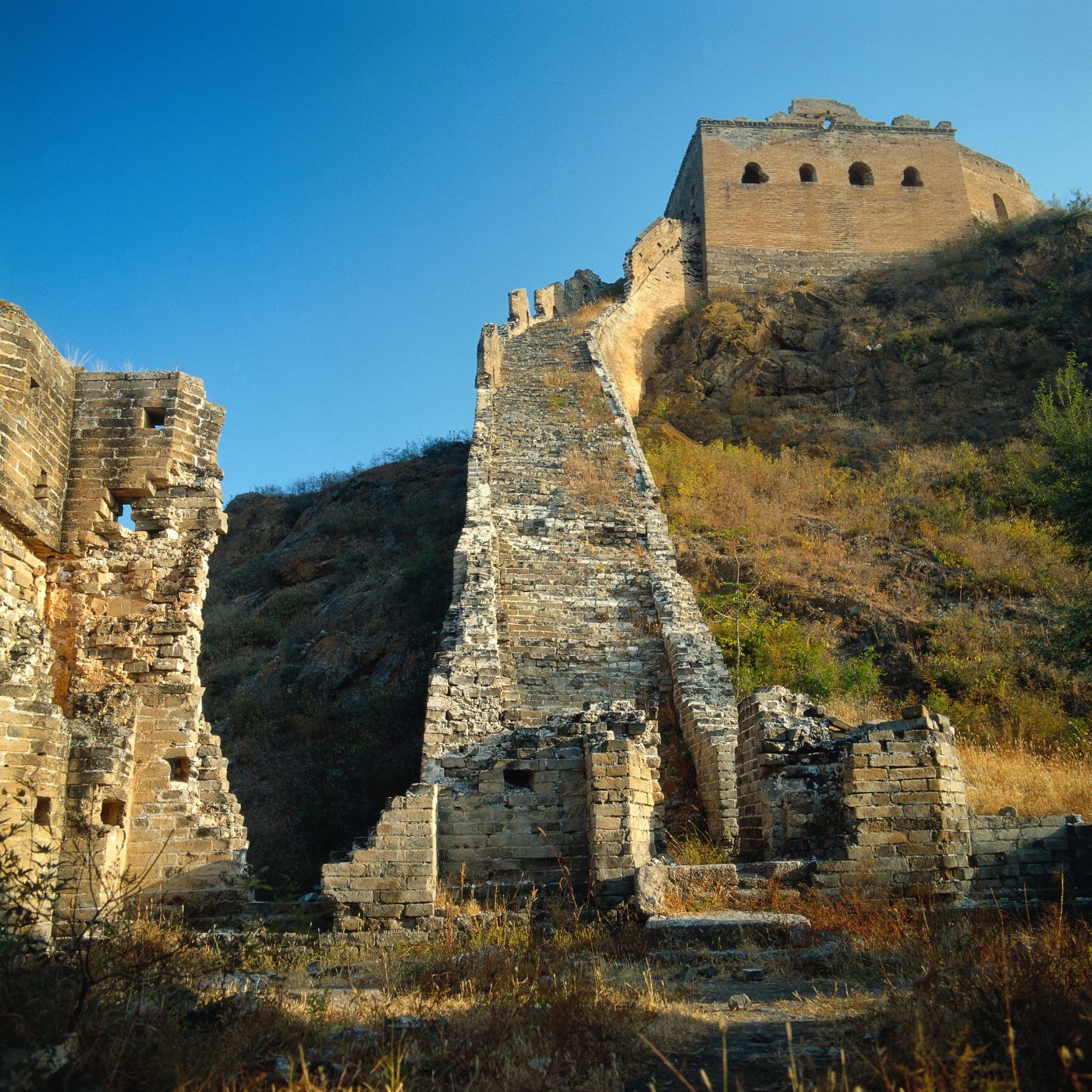
In the afternoon, we will eventually cross over into the Jinshanling Great Wall. The Great Wall at Jinshanling is one of the Great Wall's best-preserved parts with many original features. It got its name because it was built on the Greater and Lesser Jinshan ('Gold Mountain') Ranges. The Jinshanling Great Wall has not been repaired since 1570. It is a remote and relatively isolated section of the Great Wall. As there are relatively few tourists at Jinshanling Great Wall, it is an excellent place to explore on foot.
Day 2 · Jinshanling-West Simatai
Hiking Distance: 8 kms/5 miles
Hours to Take: 3.5
Meals: Breakfast, lunch and dinner
Accommodation: Camp at Huanghaucheng Great Wall
Water: Unlimited bottles
The first thing we'll do today is to watch the magnificent sunrise early in the morning. After a quick breakfast, we will resume our hike on Jinshanling's right-wing, where we will hike until we reach Simatai West, called Second Valley. As we head west, the Wall will gradually deteriorate, making the hike progressively more challenging and exciting to observe and compare.
The Jinshanling Great Wall has not been repaired since 1570. It is a remote and relatively isolated section of the Great Wall. Suppose you are looking for breathtaking views with a relatively peaceful walk. The Second Valley of Jinshanling can't be a better place to take pictures, so we hope you remember to bring your camera!
Simatai West, called the Second Valley, is the left-wing of Simatai. It is also in a severe state of ruins. It is thereby a perfect example of the real Great Wall, while too wonderful and rustic. The Wall is 7.8 m high and 5 - 6 m thick at the bottom. There are 'obstacle-walls' built perpendicular to the parapets - a feature unique to the Second Valley part of Jinshanling Great Wall.
Today, we'll camp on the Great Wall at Huanghuacheng, the quietest and zero crowded part of the Great Wall with lakes down the mountain. Enjoy the peace under the moonlight, and wake up to welcome the sunset. Have a Chinese breakfast delivered to the Wall before you walk down.
Day 3 · Lakeside Huanghuacheng-Xishuiyu
Hiking Distance: 10km/8miles
Hours to Take: 4.5
Accommodation: Great Wall Farmotel
Meals: Breakfast and lunch
Water: Unlimited bottles
We will wake up at 7:30 AM with breakfast at the hotel. We will then continue our trek, this time from Huanhuacheng to Xishuiyu.
Huanghuacheng, like Jiankou, is fast becoming popular with hikers and tourists who are looking for something a little different in their Great Wall experience. The wall here is a combination of restored and unrestored areas, giving your hike a bit more variety and adventure. When you reach the middle of the wall, you will be able to see that the countryside is swathed in yellow, as masses of wildflowers come into bloom. We will then cross over onto the Xishuiyu section. Today’s hike is quite special-part of the wall underwater! In 1974 China built the Xishuiyu Reservoir.
Following our hike today, our driver will take us back to Beijing, where you will be dropped off at your hotel, ending the tour. In the afternoon, we will drive back to Beijing and arrive at your hotel around 5:00 PM.
What we confirm
Meeting point and departure window
Admissions, tickets and local transport
Guide language, meals and accommodation
Walking level, luggage and weather plan
Return point or onward connection
Before you proceed
Share the relevant dates, group size and priorities. We will provide the current details in writing and identify anything that must be booked separately or may change with access, schedules or local conditions.
Original Great Wall stonework and watchtowers — from the Great Wall Adventure Club source site.
What makes this experience different
More than a viewpoint
Walk tower to tower and understand how the Wall follows the natural defense line.
A route for your pace
We distinguish gentler restored paths from demanding unrestored ridges before you choose.
Local route knowledge
Entrances, exits, seasonal conditions and transfer logistics are checked for your date.
TerrainStone steps, ridges and uneven historic paths
Best seasonsSpring and autumn; summer and winter need extra planning
BringGrippy footwear, water, layers and sun protection
Designed around real travelers
Every departure is matched to the group’s dates, ages, interests, walking experience and preferred comfort level. Tell us what matters most—quiet trails, photography, history, a physical challenge, family time or a broader China itinerary—and we will explain the most practical options without hiding the tradeoffs.
Questions worth asking before booking
How much time is spent walking, driving and stopping?
Which parts of the route are restored, unrestored, steep or exposed?
What is included, and what should we carry or arrange ourselves?
What changes if weather, access rules or transport schedules affect the plan?
Keep exploring
Compare more multi-day treks or talk to us about a custom route.